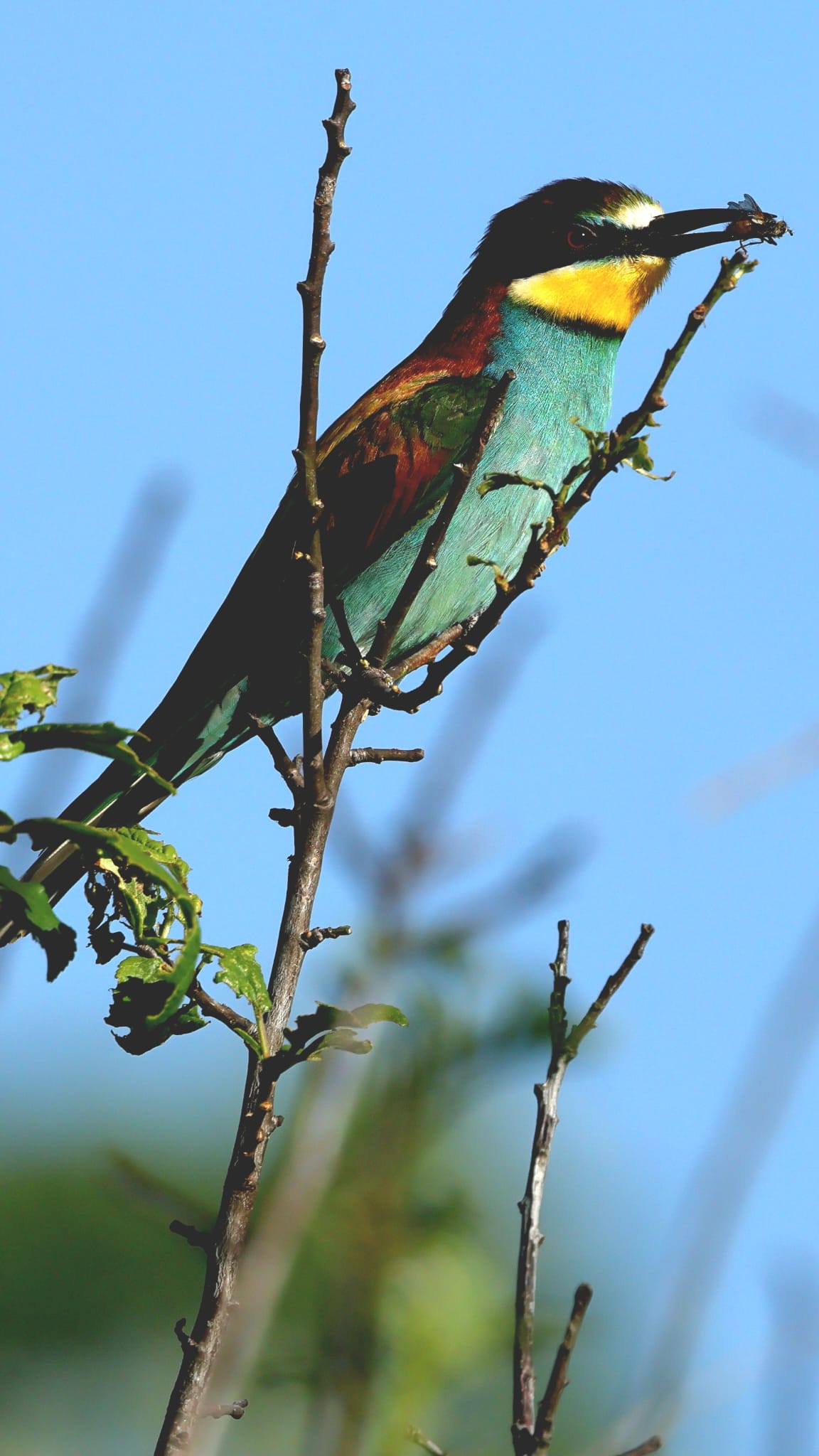
Last year I tried to make a split. It turned out: the mating flight is quite dangerous for a queen…
It was early May when I formed a brood split. At first everything went according to plan. The bees produced a supersedure cell, and on my next visit I could see that the young queen had emerged. Then nothing happened anymore. Two weeks later I found neither a queen nor fresh brood. So I hung in another frame of brood as a test for queenlessness. And sure enough: a new supersedure cell was built. Hmm - so the first queen must have been lost.
The second queen emerged too, and then … nothing again. Apparently she hadn’t returned from her mating flight either.
But hold on - there are eggs after all … but in the wrong place: in the middle of the cell walls, not at the bottom. The colony had turned drone-laying!
So what exactly is a drone-laying colony?
When a colony has been without a queen for a longer stretch of time, individual worker bees start activating their ovaries. Here’s why that’s possible: genetically, workers and queens are identical - the difference arises mainly from the different diet during the larval stage. A queen receives royal jelly as her only food throughout, while worker and drone larvae get it only briefly before switching to a simpler brood food. Royal jelly and the simpler brood food are both produced by nurse bees - young bees between 3 and 12 days old. This difference in diet is a key factor in what a larva becomes: worker or queen.
Back to the so-called “drone mothers” - the workers that activate their ovaries: they lay eggs, but since they never went on a mating flight like a queen does, those eggs are unfertilized. In bees, unfertilized eggs become drones - the male bees. Fertilized eggs, on the other hand, become workers or queens. Queens can lay both fertilized and unfertilized eggs - they store the drones’ sperm from their mating flight for the rest of their lives in a reservoir in their abdomen (the spermatheca), and can control which type of egg they lay.
Drones don’t collect pollen or nectar and do no work inside the hive. Instead, they get fed so they stay fit for their one and only job: flying out, finding a young queen, mating with her in the air, and - if that “aerial stunt” succeeds - dropping dead out of the sky. If they aren’t successful, they fly home, get fed, and fly out again the next day. The days of a colony that produces only drones are numbered - the workers die off one by one, and before long the colony collapses. To me it’s an absolutely astonishing piece of evolution that a colony doomed to perish still tries, through this last resort of drone-laying, to pass on its genes.
Fixing this problem got a bit more complicated: I shook the colony out about 20m away from the apiary; the bees still able to fly returned to the hive, which had been put back in its original spot. The drone-laying workers are, as a rule, unable to fly, so they don’t find their way back into the hive. That’s intentional - only once the drone-laying workers are gone is there any chance of getting a proper queen again.
Hanging in a frame with fresh eggs from another colony right away would have been premature, though - the colony was still missing the nurse bees that produce the brood food a queen-destined larva needs. So first a frame of brood close to emerging had to go into the hive. That way, fresh nurse bees were ready a week later, when I hung in another frame of fresh eggs.
And indeed, the engine started up again - supersedure cell, emergence, mating flight, and finally: fresh eggs exactly where they belong - at the bottom of the cells. By then it was already late August, cutting it very close. At that time of year there are hardly any drones left, so a mating flight turns into speed dating with a rather limited selection of old bachelors. That this very colony went on to become one of my most productive colonies the following year is one of the many little miracles you get to experience with bees.
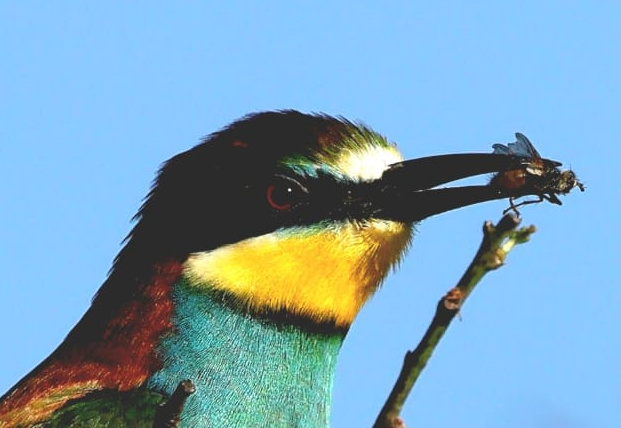
But what does any of this have to do with the bee-eater?
Well, it eats bees - and, by all accounts, is quite partial to queens on their mating flight too. Was it the one that “intercepted” two of my queens? I’ll never find out, and neither will my beekeeper colleague, who observed something similar with her splits. If I wanted to eliminate this uncertainty from raising queens, I’d probably have to switch to artificial insemination - and that’s a step too far for me. So I’d rather let nature take its course. And a flashy character like the bee-eater is simply part of that.