When I harvested the first super of the year at the Bellevue apiary, I was surprised: almost pure honeydew honey, dark, robust, with that typical malty, spicy note. No blossom honey tastes like that. High time to write down what’s actually going on there.
Despite what the name suggests, honeydew has nothing to do with dew. It forms when aphids, bark lice, or scale insects tap into the sap of trees - mainly spruce and fir, but also linden and oak. These insects are really only after the amino acids in the sap; they can’t fully use the sugar, though. So they excrete it again, as sticky, sweet droplets on needles and leaves. My bees collect exactly this excretion and carry it into the hive as “honeydew.”
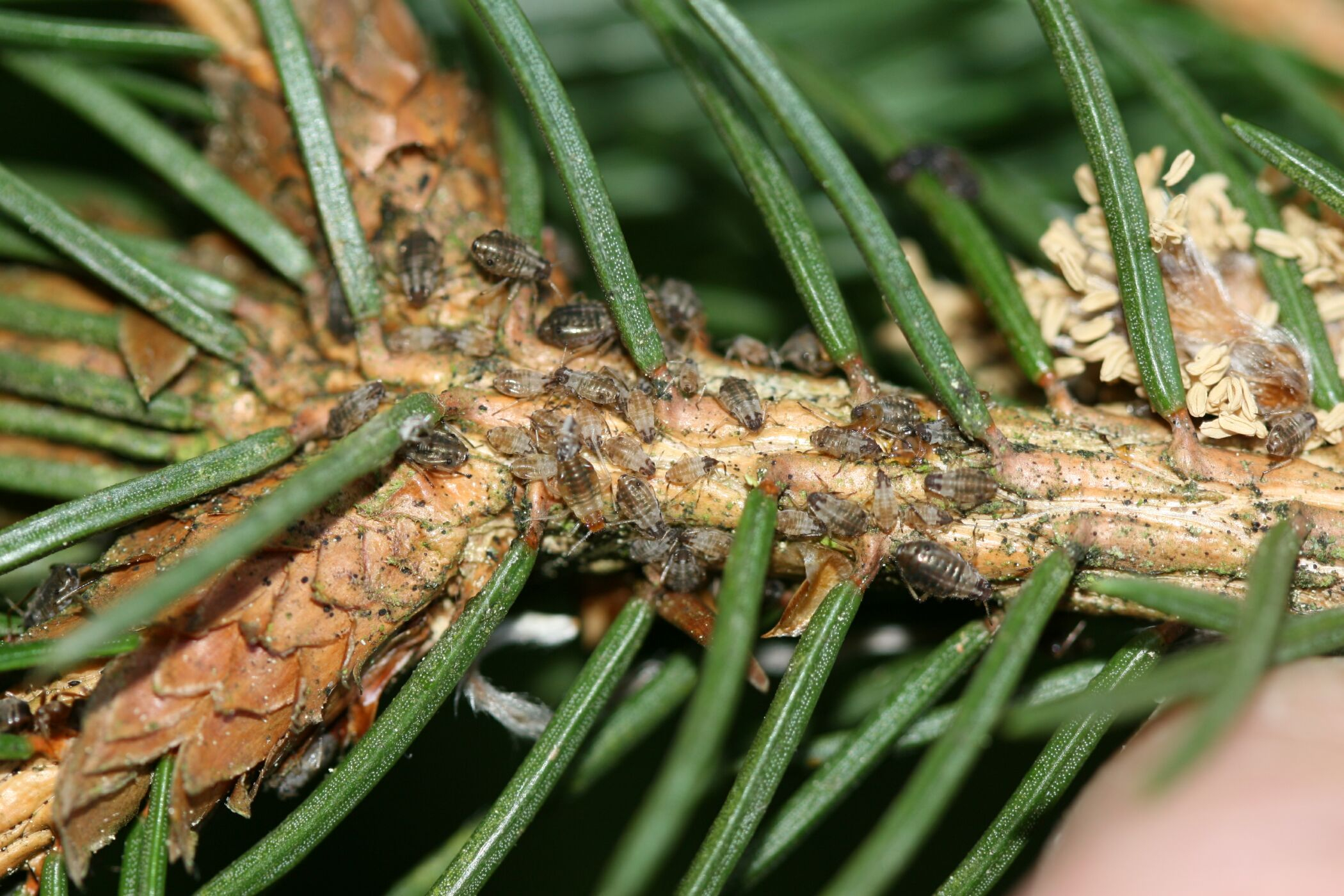

That also explains why honeydew honey tastes so different from blossom honey. It contains more minerals, fewer simple sugars like fructose and glucose, but more complex, multi-chain sugars. That makes it darker, spicier, often with a slightly malty to resinous note. In Germany and Austria, honeydew honey from fir and spruce is also often called “Waldhonig” (forest honey).
Why the Bellevue apiary in particular produces so much honeydew probably has to do with its elevation and tree cover. Aerial photos also show there’s far more forest here than at my other apiaries. Whether there’s a lot of honeydew depends on the number of aphids and the weather - and that’s a science all its own. It starts as early as the previous autumn, when the foundation for next spring’s aphid population is laid, and continues with how temperatures develop in spring. Heavy rainfall can wash the honeydew away. This season, apparently, everything lined up.